

When your child needs a crown on a baby tooth, the first difference you may notice is the color. Stainless steel crowns look silver, while white crowns are made to blend in with nearby teeth. But the choice also depends on where the tooth sits, how much healthy tooth remains, and how the crown needs to fit.
For a back baby tooth with extensive decay, stainless steel is an established, durable option. For a front tooth that shows when your child smiles, a tooth-colored option may be worth discussing. Some white crowns can also be used on back teeth. Here’s how to compare the options and what to ask before treatment.
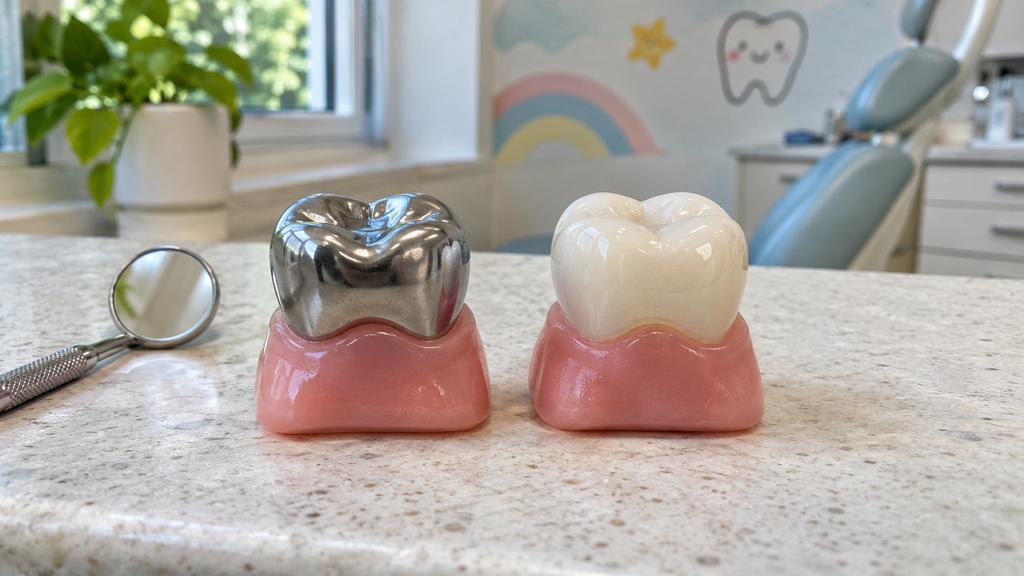
Stainless Steel and White Crowns at a Glance
| What to compare | Stainless steel crowns | White crowns |
| Appearance | Silver-colored metal | Tooth-colored; appearance varies by material |
| Common use | Frequently used on baby molars | Considered for visible front teeth and some back teeth |
| Fit | A prefabricated metal crown can be adjusted to fit the tooth | Fit depends on the material. Zirconia crowns are rigid, while composite resin strip crowns bond to the tooth |
| Durability | A long track record on baby molars | Depends on the specific material, the tooth, and how the crown fits |
Little Smiles offers pediatric dental crowns in stainless steel and tooth-colored options. If your dentist suggests a white crown, ask which material they recommend for that tooth. The word “white” tells you how it looks, but it doesn’t tell you how it’s made or placed.
Why Put a Crown on a Baby Tooth?
A crown covers the part of the tooth above the gumline. A filling repairs a smaller area; a crown provides coverage around the tooth. That can help when decay affects several sides of a baby tooth or when the tooth needs more support after pulp therapy, sometimes called a baby root canal.
Even though baby teeth are temporary, they help children chew and hold space for permanent teeth. When a tooth can be restored and still has time before it falls out, a crown can help keep it useful. Your dentist will first check whether the tooth can support a crown and whether restoring it makes sense for your child.
What Makes Each Crown Material Different?
Stainless steel
Stainless steel crowns come in different sizes. The dentist selects a size and can adjust the metal to fit the tooth. Stainless steel has a long record of use on baby molars, including teeth with large cavities that affect several surfaces. The main tradeoff parents notice is the silver color, which may be visible when a child laughs or opens wide.
Zirconia
Zirconia is a tooth-colored ceramic. Pediatric dentists may consider it for a front tooth or a selected back tooth when appearance matters and the tooth can support it. A zirconia crown is rigid, so the dentist cannot reshape its edges the way they can with a metal crown. The tooth generally needs more preparation to fit a zirconia crown than it would for a stainless steel one. That difference matters when the dentist assesses how much tooth structure is available.
Composite resin strip crowns
A composite resin strip crown is another tooth-colored option used in pediatric dentistry, mainly on selected baby front teeth. The dentist shapes the tooth-colored resin around the tooth using a temporary form. The resin bonds to the tooth, so the dentist needs enough remaining structure to bond to and must be able to keep the area dry during placement. If you hear “white crown,” ask whether the dentist means a ceramic crown, a resin option, or another material.
How Your Child’s Dentist Makes the Recommendation
Where the tooth sits. A baby molar does much of the work when your child chews. For a front tooth, the dentist may also weigh how visible the restoration will be when your child talks or smiles. The dentist checks how the teeth meet so the new crown fits your child’s bite.
How much tooth can support the crown. Two teeth can both need full coverage and still have different options. A front tooth may have enough structure for a bonded resin crown. In another case, the dentist may recommend a different material because there’s less healthy structure to work with or because the area would be difficult to keep dry.
How long the baby tooth is expected to stay. A molar that needs to keep working for several more years raises different questions from a tooth that is close to falling out. The dentist considers your child’s dental development alongside the condition of the tooth.
What placement involves for your child. Different materials take different steps to fit and secure. Your child’s dentist can explain what the visit would involve and how the team can adapt its explanations and care to your child’s age and comfort level.
Why two teeth might get different crowns
Imagine your child needs crowns on two teeth: a front baby tooth that shows in photos and a back molar with decay on several sides. The dentist may discuss a tooth-colored material for the front tooth and stainless steel for the molar. If both materials are reasonable options for the molar, you can ask how each one would fit and what would need to be done to prepare the tooth. If only one is appropriate for the front tooth, ask what limits the choice. Looking at each tooth separately can make the plan easier to understand, especially when the two crowns will look different.
If you’re weighing two options, ask: “What makes this material a good fit for this tooth?” If both are appropriate, follow up with: “What would be different about preparing the tooth or placing the crown?” Those questions can help you understand which tradeoffs matter in your child’s case.
How to Care for a Crown at Home
Follow the dental team’s instructions about eating and drinking after treatment. Once your child is back to their usual routine, help them brush twice a day with an age-appropriate amount of fluoride toothpaste. Brush gently along the gumline and help them floss where teeth touch. A crown restores one tooth, but daily care still matters for the gums and the rest of the mouth.
Keep up with your child’s dental exams and cleanings so the team can check the crown and monitor the baby tooth as your child grows. Call the dental office promptly if the crown moves, the bite feels uncomfortable, or you notice new pain or swelling.
FAQs
Can a child get a white crown on a back baby tooth?
Yes, a pediatric dentist may consider zirconia for some baby molars. The decision depends on how much tooth structure remains, how the teeth meet, and whether the crown can fit securely. Ask which tooth-colored options are available for your child’s molar.
Do stainless steel crowns contain nickel?
Stainless steel crowns can contain nickel. Tell the dental team before treatment if your child has a known nickel or other metal allergy. The dentist can check the material and discuss alternatives if needed.
How long can a crown stay on a baby tooth?
The goal is usually for the crown to stay in place until the baby tooth falls out naturally. The expected time varies by tooth and by your child’s stage of development. Your dentist can explain what they expect for that tooth and check it at regular visits.
What should I do if the crown comes loose or falls off?
Call your child’s dental office for guidance. If the crown came out and you have it, keep it and bring it to the appointment. Avoid gluing or trying to fit it back on yourself. The dentist can check the tooth and explain the next step.
If your child’s dentist has recommended a crown and you’d like to talk through the options, contact your Little Smiles office. We’ll explain what we recommend for your child’s tooth and why.