

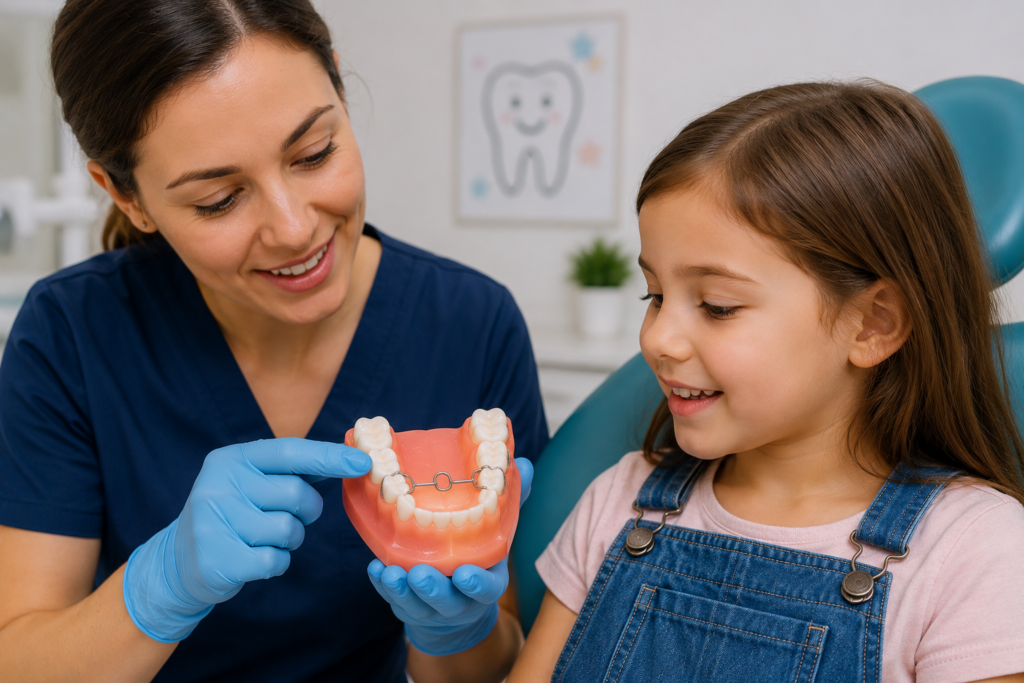
Hearing that your child may need a space maintainer can raise a lot of questions. If a baby tooth is lost earlier than expected because of injury, decay, or another reason, you may wonder whether treatment is really necessary while you wait for the permanent tooth to come in.
Baby teeth do much more than help children chew and smile. They also help guide permanent teeth into their proper positions. When a baby tooth is lost too soon, nearby teeth may begin to shift into the empty space before the adult tooth is ready to erupt. In some situations, a space maintainer may help preserve that space as your child’s smile continues to develop.
Understanding when space maintainers for children may be recommended can help parents make informed decisions about their child’s oral health.
What Is a Space Maintainer?
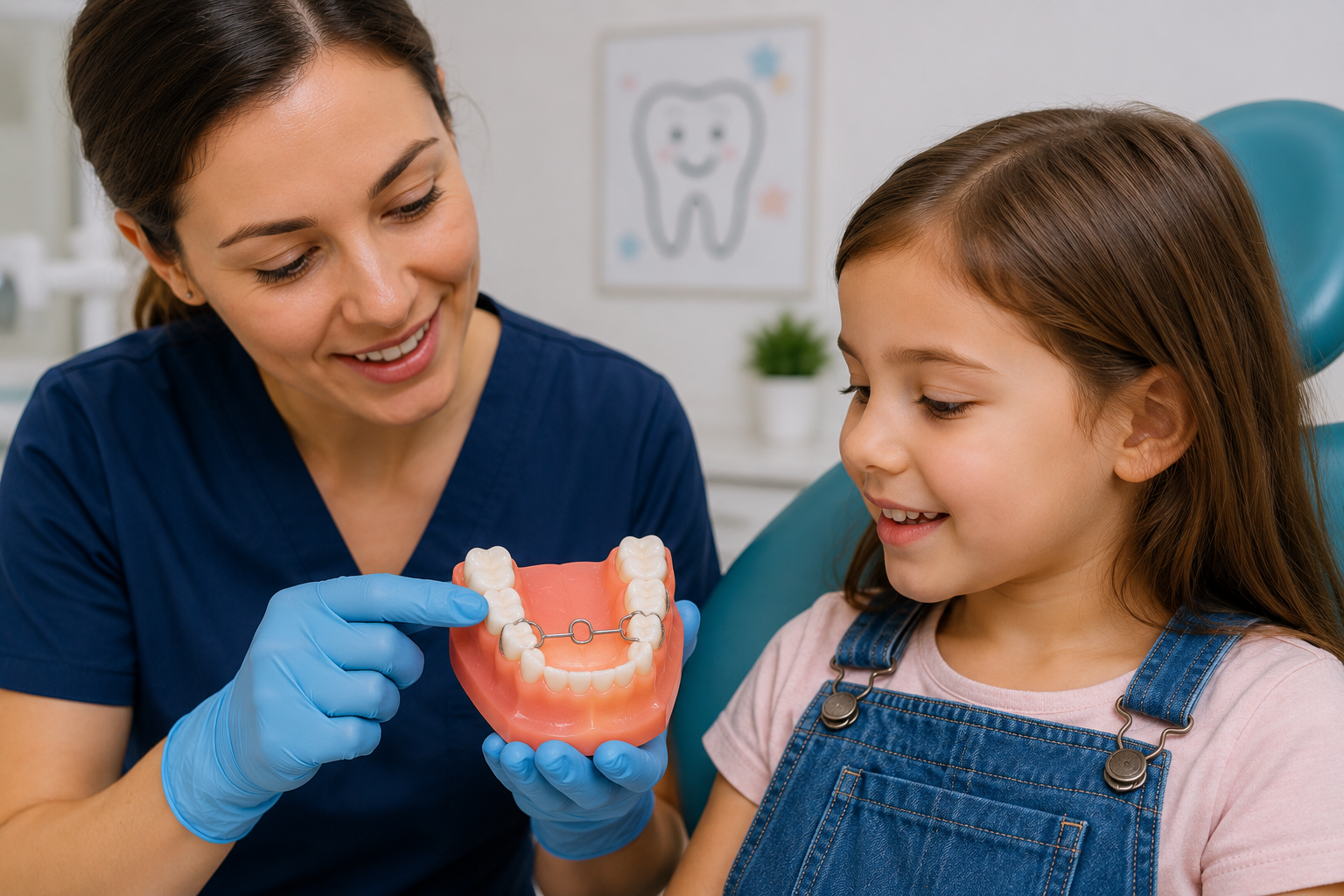
A space maintainer is a custom dental appliance designed to help preserve the space left behind after a baby tooth is lost prematurely.
Its purpose is to help prevent nearby teeth from drifting into the open area before the permanent tooth has a chance to erupt. Keeping adequate space available may help support healthy dental development and reduce the likelihood of spacing concerns later.
Not every child who loses a baby tooth will need a space maintainer. The decision depends on several factors, including which tooth was lost, your child’s age, and how the permanent tooth is developing.
Why Are Baby Teeth Important?
Because baby teeth eventually fall out, it is easy to assume they are less important than permanent teeth. In reality, they play an essential role in your child’s oral development.
Baby teeth help children:
- Chew food comfortably
- Develop clear speech
- Maintain space for permanent teeth
- Support healthy jaw development
- Guide adult teeth into position
When one is lost earlier than expected, your pediatric dentist will evaluate whether preserving that space is beneficial for your child’s developing smile.
When Might a Space Maintainer Be Recommended?
A space maintainer may be recommended when a baby tooth is lost well before the permanent tooth is expected to erupt.
Some common situations include:
- A baby tooth is removed because of extensive decay.
- A tooth is lost following an injury.
- A baby tooth is missing earlier than expected.
- There is concern that nearby teeth could shift into the empty space.
Every child develops differently, so recommendations are always based on an individual evaluation rather than a standard timeline.
How Does a Pediatric Dentist Decide?
Several factors help determine whether a child may benefit from a space maintainer.
During dental cleanings and exams, the pediatric dentist may evaluate:
- Which baby tooth was lost
- Your child’s age
- How much space is available
- Whether the permanent tooth is developing normally
- The expected timing of eruption
In some cases, digital dental X-rays may also be recommended to better understand how permanent teeth are developing beneath the gums. These images help the dental team make informed treatment recommendations based on your child’s individual needs.
What Types of Space Maintainers Are Available?
Space maintainers come in different designs depending on which tooth was lost and where it is located in the mouth.
Some are attached to one tooth, while others are designed to support a larger area. Your pediatric dentist will recommend the type that best fits your child’s dental development and treatment needs.
Rather than focusing on the appliance itself, the goal is to help maintain the proper amount of space until the permanent tooth is ready to come in naturally.
Caring for a Space Maintainer
Once a space maintainer has been placed, good oral hygiene and regular follow-up visits become especially important.
Parents can help children care for their appliance by encouraging them to:
- Brush carefully around the appliance every day.
- Follow any cleaning instructions provided by the dental team.
- Avoid chewing on hard or sticky foods if advised.
- Let a parent know if the appliance feels loose or uncomfortable.
Continuing preventive pediatric dental care helps your child’s dentist monitor the appliance and make sure it continues to function as intended as your child grows.
What Happens If a Space Maintainer Is Not Used?
Not every child needs a space maintainer, so treatment is never recommended automatically.
However, if a child loses a baby tooth early and the surrounding teeth begin to shift, there may be less room for the permanent tooth to erupt. Depending on the situation, this could affect how permanent teeth come in and whether additional treatment may be needed in the future.
Because every child’s smile develops differently, the best way to know whether a space maintainer is appropriate is through an individualized evaluation.
Routine Checkups Help Monitor Your Child’s Smile
Children’s smiles continue to change as they grow.
Scheduling dental cleanings and exams allows your pediatric dentist to monitor tooth eruption, evaluate spacing, and identify concerns before they become more complex. These visits also give parents an opportunity to ask questions about their child’s oral development and learn how to support healthy habits at home.
If your child loses a baby tooth earlier than expected, it is a good idea to schedule an evaluation rather than waiting for the permanent tooth to appear.
Conclusion
Losing a baby tooth early does not always mean a child will need a space maintainer, but it is important to have the situation evaluated by a pediatric dentist. Every child develops at a different pace, and treatment recommendations should always be based on their unique needs and dental development.
If your child has lost a baby tooth earlier than expected or you have questions about space maintainers for children, contact Little Smiles Pediatric Dentistry to schedule an appointment. Our team is committed to providing personalized, compassionate care that supports healthy smiles as children grow.
Frequently Asked Questions
Does every child need a space maintainer after losing a baby tooth?
No. Whether a child needs a space maintainer depends on factors such as which tooth was lost, your child’s age, and how the permanent tooth is developing.
How long does a child wear a space maintainer?
The length of time varies for every child. The appliance is typically worn until the permanent tooth is ready to erupt or your pediatric dentist determines it is no longer needed.
Are space maintainers removable?
Some space maintainers are fixed in place, while others may be removable. Your pediatric dentist will recommend the type that is most appropriate for your child’s needs.
Will my child need dental X-rays before getting a space maintainer?
In some situations, digital dental X-rays may be recommended to evaluate the position and development of the permanent teeth before treatment decisions are made.
What should I do if my child’s space maintainer becomes loose?
If the appliance feels loose or becomes damaged, contact your pediatric dentist as soon as possible so it can be evaluated.