

Brushing your child’s teeth is one of the best ways to protect their oral health, so it can be frustrating when bad breath doesn’t go away afterward. You may wonder if they’re brushing well enough, if they’re getting sick, or if something more serious is happening.
The truth is that persistent bad breath, also known as halitosis, is fairly common in children and can have several different causes. While poor brushing habits are one possibility, they’re not the only explanation. Bacteria, trapped food, cavities, and other oral health concerns can all contribute to unpleasant breath, even when your child brushes twice a day.
Understanding what causes bad breath can help you support healthy habits at home and recognize when it’s time to schedule a visit with a pediatric dentist.
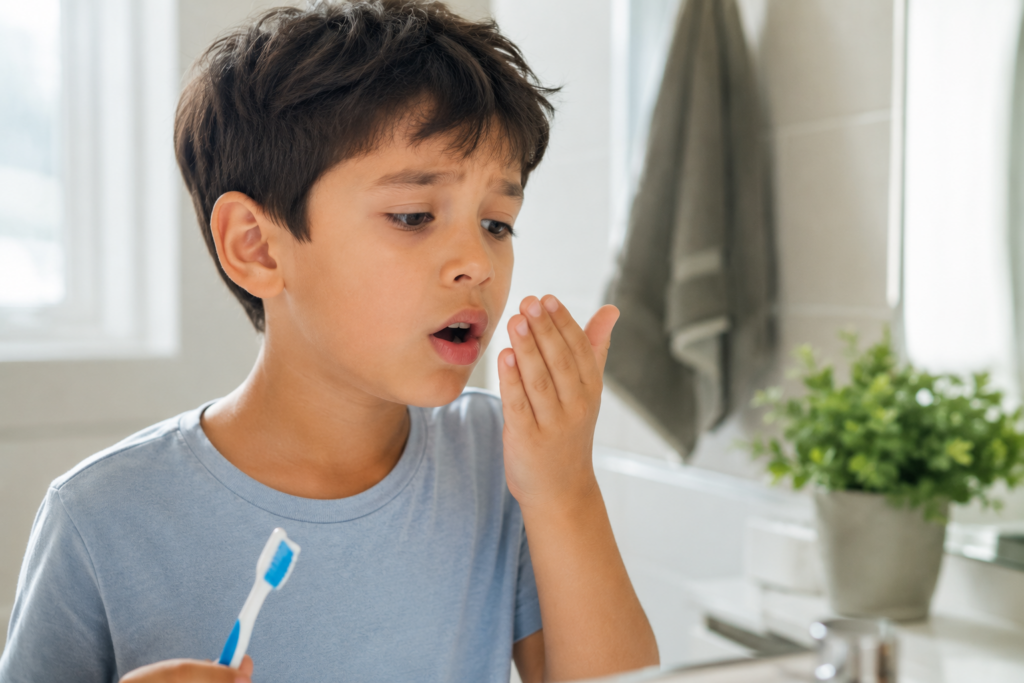
Occasional Bad Breath vs. Persistent Bad Breath
Most children experience bad breath from time to time. Morning breath is normal because saliva production slows while sleeping, allowing bacteria to build up overnight. Certain foods can also temporarily affect your child’s breath.
Persistent bad breath is different. If your child’s breath continues to smell unpleasant throughout the day or returns shortly after brushing, it may be a sign that bacteria are remaining in the mouth or that an underlying dental issue should be evaluated.
Rather than simply brushing more often, it’s helpful to understand what may be contributing to the problem.
Common Causes of Bad Breath in Children
Plaque Buildup
Even children who brush regularly can miss certain areas of their mouth. Plaque naturally forms on the teeth throughout the day, and if it isn’t removed thoroughly, bacteria continue to grow and produce odors.
Professional dental cleanings and regular dental exams help remove plaque buildup and give your child’s pediatric dentist the opportunity to monitor their oral health.
Food Trapped Between Teeth
A toothbrush cleans the front, back, and chewing surfaces of the teeth, but it can’t always remove food caught between them. As food particles remain in these spaces, bacteria begin breaking them down, which can contribute to bad breath.
Once your child’s teeth begin touching, daily flossing becomes an important part of maintaining good oral hygiene.
Cavities
Tooth decay doesn’t always cause immediate discomfort. In some cases, cavities create areas where bacteria collect more easily, allowing unpleasant odors to develop over time.
Regular dental checkups help identify cavities early, often before they become larger concerns that require more extensive treatment.
Preventive services, such as professional cleanings and fluoride treatments when appropriate, can help strengthen teeth and reduce the risk of cavities developing in the first place.
Incomplete Brushing
Many children are eager to brush independently, but younger children often need guidance to brush every surface of every tooth for the recommended two minutes.
Parents and caregivers can help reinforce healthy habits by supervising brushing and assisting when needed until their child develops the coordination to brush effectively on their own.
Dry Mouth
Saliva helps rinse away bacteria and food particles throughout the day. When the mouth becomes dry, bacteria can accumulate more easily, contributing to bad breath.
Encouraging your child to stay hydrated by drinking water throughout the day can help support a healthy oral environment.
When Should You Schedule a Visit With a Pediatric Dentist?
Occasional bad breath isn’t usually a cause for concern, especially if it goes away after brushing or is limited to the morning. However, if your child’s bad breath persists despite good oral hygiene, it’s a good idea to schedule a dental evaluation.
A visit to a pediatric dentist is recommended if your child:
- Has bad breath that continues for several days or keeps returning.
- Complains of tooth pain or sensitivity.
- Has swollen or bleeding gums.
- Has visible spots, holes, or discoloration on a tooth.
- Has difficulty brushing because of discomfort.
- Is overdue for a routine dental exam and cleaning.
During the appointment, your child’s pediatric dentist will examine their teeth and gums, evaluate their oral hygiene habits, and look for common causes of persistent bad breath, such as plaque buildup or tooth decay. If no dental cause is identified, they may recommend discussing your concerns with your child’s primary healthcare provider.
Helping Your Child Build Healthy Oral Hygiene Habits
The best way to reduce the risk of persistent bad breath is to build strong oral hygiene habits early. Children often need encouragement and supervision as they learn to care for their teeth, and small improvements to their daily routine can make a big difference.
Parents and caregivers can help by encouraging children to:
- Brush twice a day with fluoride toothpaste appropriate for their age.
- Floss every day once teeth begin touching.
- Drink water throughout the day.
- Eat a balanced diet and limit frequent sugary snacks and drinks.
- Replace their toothbrush every three to four months or sooner if the bristles become worn.
Keeping up with routine preventive dental visits is just as important. Professional cleanings remove plaque that brushing alone may miss, while regular exams allow your child’s pediatric dentist to monitor their oral health and identify concerns early.
Supporting a Healthy Smile at Every Stage
Persistent bad breath can be frustrating, but it’s often a sign that your child’s oral hygiene routine or dental health deserves a closer look. In many cases, the cause can be identified and addressed with healthy daily habits, regular preventive care, and guidance from a pediatric dentist.
At Little Smiles Pediatric Dentistry, we’re committed to helping children build healthy smiles through compassionate, evidence-based care and parent education. Whether your child is due for a routine dental exam or you’re concerned about persistent bad breath, our team is here to provide personalized care in a welcoming, child-friendly environment.
Ready to help your child enjoy a healthier smile? Contact Little Smiles Pediatric Dentistry to schedule an appointment at one of our convenient St. Louis-area locations. We’re here to partner with your family and support your child’s oral health every step of the way.