

As a parent, you want to do everything you can to help your child avoid cavities. Brushing, flossing, healthy eating habits, and regular dental visits all play important roles in protecting growing smiles. Another preventive treatment your child’s pediatric dentist may recommend is dental sealants.
If you’ve ever wondered when dental sealants are recommended or whether your child needs them, you’re not alone. Understanding how sealants work and when they’re most beneficial can help you make informed decisions about your child’s oral health.
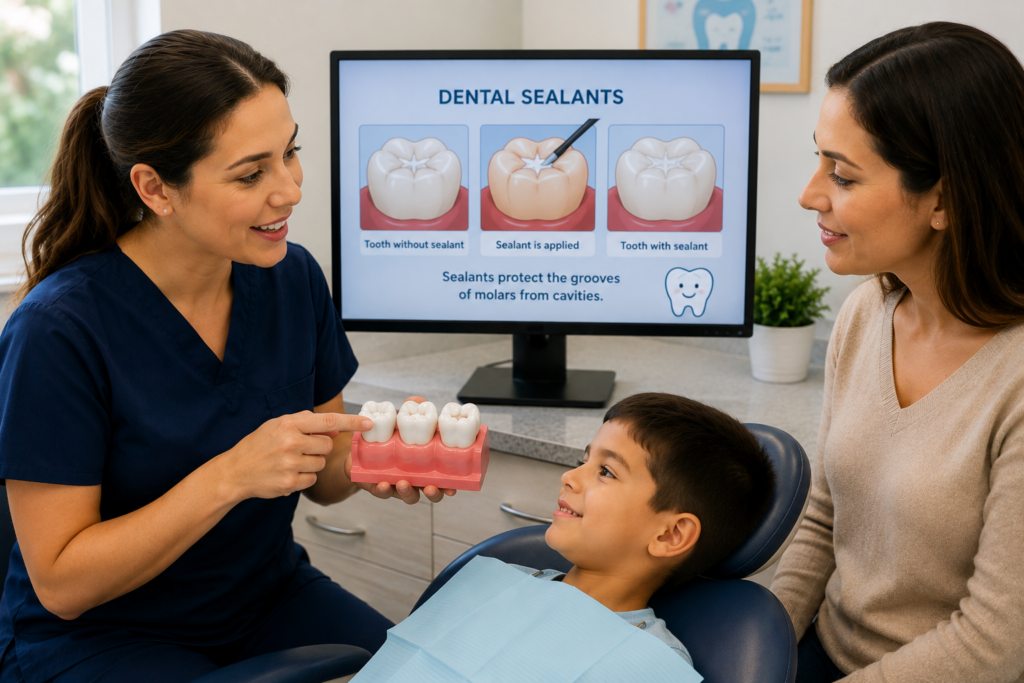
What Are Dental Sealants?
Dental sealants are thin, protective coatings applied to the chewing surfaces of back teeth, particularly the permanent molars. These teeth have deep grooves and pits where food particles and bacteria can become trapped, making them more difficult to clean with brushing alone.
The sealant creates a smooth protective barrier over these grooves, helping reduce the risk of cavities developing in these hard-to-reach areas.
Applying sealants is a quick, non-invasive preventive treatment that can often be completed during a routine dental visit.
Which Children Benefit Most from Dental Sealants?
Not every child will receive sealants at the same age. Recommendations are based on several factors, including:
- Your child’s age
- When permanent molars erupt
- Cavity risk
- Oral hygiene habits
- Previous history of tooth decay
- Overall oral health
Your pediatric dentist will evaluate your child’s teeth during regular dental exams and determine whether sealants are an appropriate part of their preventive care plan.
When Are Sealants Commonly Recommended?
For many children, sealants are recommended soon after the permanent molars come in.
The first permanent molars often erupt around ages 6 to 7, while the second permanent molars usually appear between ages 11 and 13. Applying sealants shortly after these teeth erupt allows them to be protected before cavities have an opportunity to develop.
Because every child develops differently, your pediatric dentist will recommend the right timing based on your child’s individual dental growth.
Are Sealants Only for Permanent Teeth?
Sealants are most commonly placed on permanent molars because these teeth are expected to last a lifetime and are especially vulnerable to cavities.
In some situations, a pediatric dentist may recommend sealants for certain baby teeth if they have deep grooves and the child has an increased risk of tooth decay. Whether this is appropriate depends on each child’s individual needs.
Do Dental Sealants Replace Brushing and Flossing?
No.
Sealants are designed to complement. Not replace healthy daily habits.
Children should continue to:
- Brush twice a day with fluoride toothpaste.
- Floss every day.
- Eat a balanced diet that limits sugary snacks and drinks.
- Visit the dentist regularly for dental cleanings and exams.
Together, these preventive measures help reduce the risk of cavities and support long-term oral health.
How Long Do Dental Sealants Last?
Dental sealants can continue protecting teeth for several years. During routine dental visits, your pediatric dentist will check the condition of the sealants to ensure they remain intact and effective.
If a sealant becomes worn or chipped over time, it may be repaired or replaced if needed.
Regular checkups help ensure your child’s teeth continue receiving the protection they need.
Are Dental Sealants Safe?
Yes. Dental sealants have been used for many years as part of preventive pediatric dentistry.
Your pediatric dentist will recommend sealants only when they’re appropriate for your child’s individual oral health needs. Parents are encouraged to ask questions during their child’s appointment so they understand how sealants fit into their child’s overall preventive care plan.
Prevention Starts with Personalized Care
At Little Smiles Pediatric Dentistry, we believe prevention is one of the best ways to help children enjoy healthy smiles as they grow. Every child is unique, which is why we create personalized treatment plans based on age, dental development, cavity risk, and individual needs.
Our board-certified pediatric dentists use evidence-based preventive care while making every visit as positive and comfortable as possible through our child-friendly approach, including the Tell, Show, Do technique that helps children build confidence during dental appointments.
If you’re wondering whether dental sealants are right for your child, contact Little Smiles Pediatric Dentistry to schedule a preventive dental visit. Together, we’ll help your child build healthy habits and a confident smile that lasts for years to come.
Frequently Asked Questions
At what age should children get dental sealants?
Many children receive dental sealants soon after their first permanent molars erupt, usually around ages 6 to 7. A second set of sealants may be recommended when the second permanent molars come in, often between ages 11 and 13. Your pediatric dentist will recommend the best timing based on your child’s dental development and cavity risk.
Do all children need dental sealants?
Not necessarily. While many children benefit from sealants, recommendations are based on factors such as cavity risk, oral hygiene habits, tooth anatomy, and overall oral health. Your child’s pediatric dentist will determine whether sealants are appropriate during a routine dental examination.
How long do dental sealants last?
Dental sealants can protect teeth for several years. During routine dental checkups, your pediatric dentist will examine the sealants to ensure they remain intact and continue protecting the chewing surfaces of the teeth. If needed, they can be repaired or replaced.
Can children still get cavities with dental sealants?
Sealants significantly reduce the risk of cavities on the chewing surfaces they protect, but they don’t prevent every cavity. Children should continue brushing twice a day, flossing daily, eating a balanced diet, and visiting the dentist regularly to maintain good oral health.
Is getting dental sealants uncomfortable?
Applying dental sealants is a quick, non-invasive preventive procedure that does not require drilling into the tooth. Most children tolerate the process very well as part of a routine preventive dental visit.